In the world of tactical and sports shooting, there is an eternal struggle between two seemingly opposing goals: speed and precision. Shooting incredibly fast means nothing if you miss the target, while a millimeter-precise hit loses its tactical value if the reaction was too slow.
The bridge that connects these two extremes and allows you to be both fast and accurate is trigger control. Although it sounds simple, pulling the trigger properly without disturbing the sight picture represents one of the most complex motor skills to execute under stress.
The Anatomy of the Perfect Trigger Pull
The biggest mistake shooters make when trying to speed up their rate of fire is transferring tension from the hand to the index finger. The foundation of good control is isolation: the index finger must operate completely independently from the rest of the hand.
To achieve consistency at high speeds, you need to break down the trigger pull process into three phases:
- Taking up the slack: The index finger pulls the trigger back quickly and decisively until it feels mechanical resistance (the so-called "wall").
- The Break: From the moment you feel resistance, the pull must be smooth and strictly straight back. Any sideways pressure (left or right) inevitably pushes the barrel off target and ruins the shot.
- Follow-through and Reset: After the shot is fired, the finger releases the trigger in a controlled manner only as much as necessary for the mechanism to return to its starting position (the reset), paving the way for a fast follow-up shot.
It All Starts with the Grip (And Your Holster)
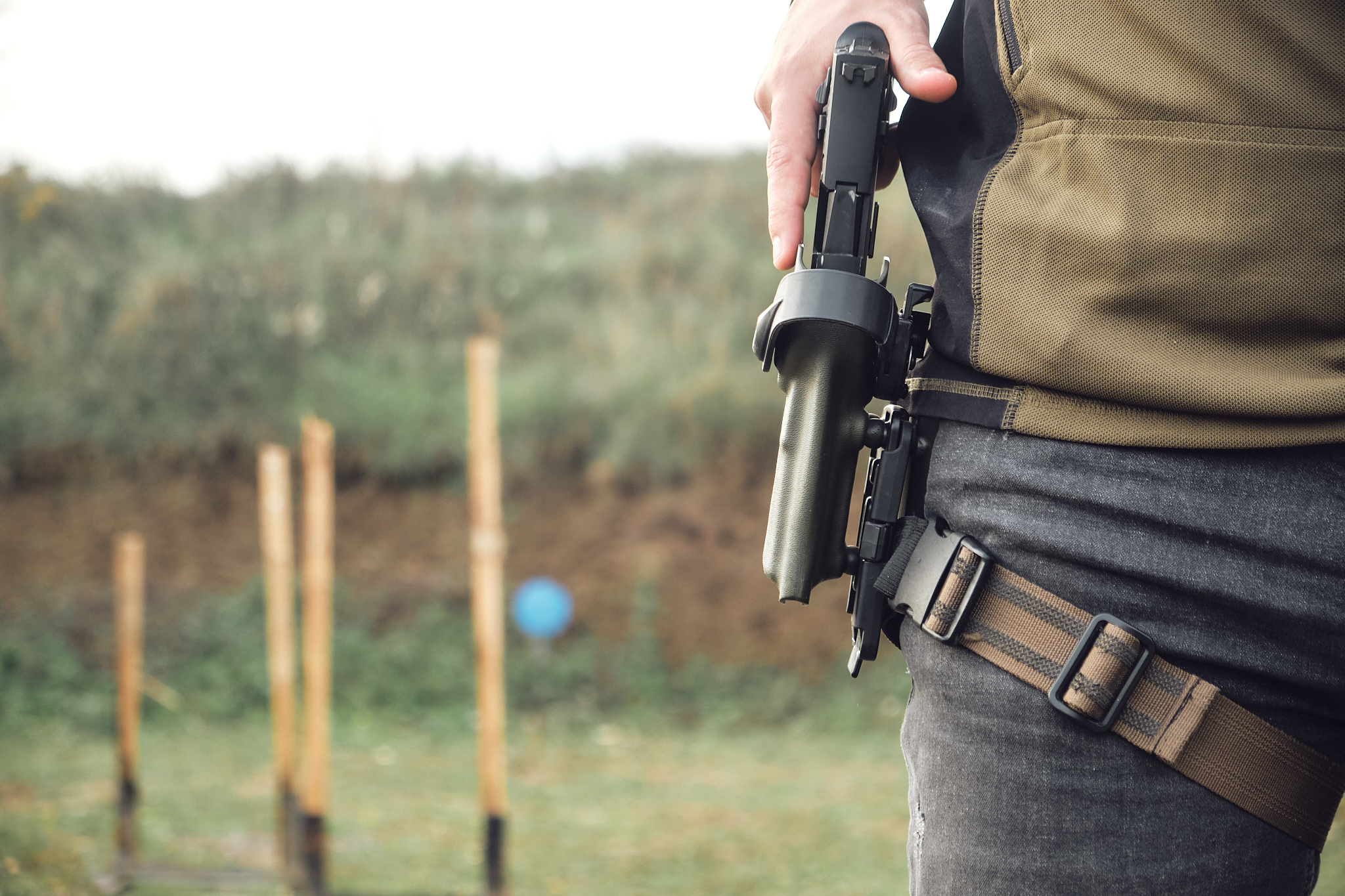
You can know trigger theory to perfection, but it falls apart the moment you don't have a proper and firm grip on the weapon. Trigger control isn't formed at the moment you aim, but in the split second your hand makes contact with the weapon in the holster.
If the weapon isn't positioned correctly, your index finger won't rest on the trigger at the ideal angle (a 90-degree angle). That is why we explain why "universal" doesn't exist and what the dangers of bad holsters are compared to custom-made ones.Only a Kydex holster, surgically precision-molded for your specific gun model, allows you to establish a full "combat grip" while the weapon is still holstered. When the initial grip is perfect, the finger naturally falls onto the trigger in the ideal position for fast shooting.
System Stability for Follow-Up Shots
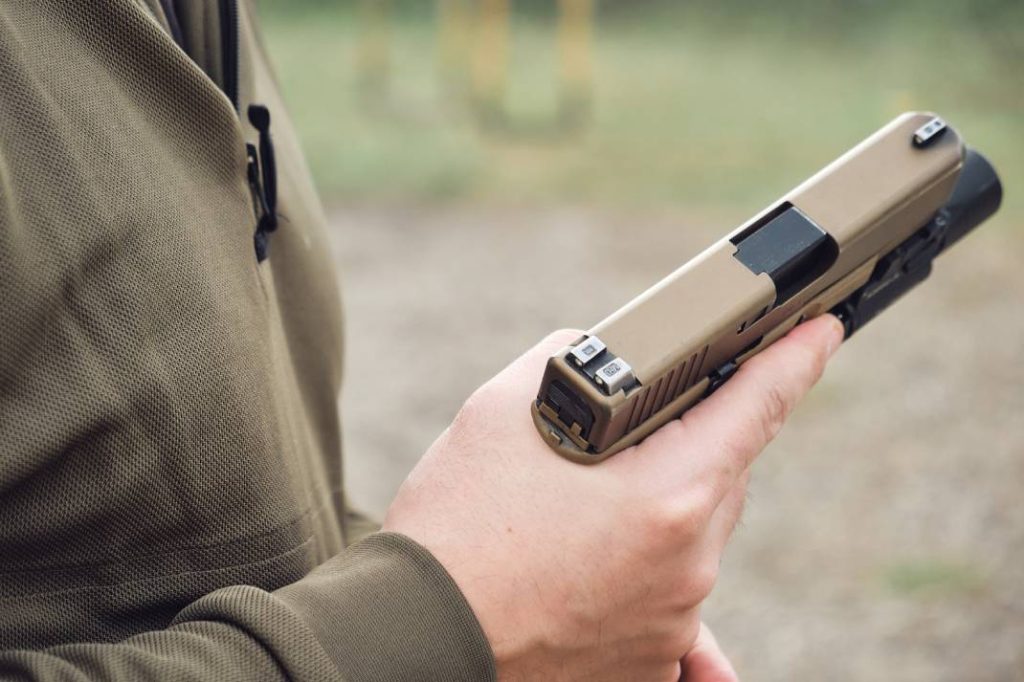
When you are required to fire a series of fast hits (multiple shots), the stability of the entire system becomes crucial. Weapon recoil tests your grip, but also the gear you wear. When performing advanced drawing drills and target transitions, your gear must not give way under pressure.
Your carry system must be rigid and immobile so that every movement you make is economical and predictable. The weapon must be in the exact same place, at the exact same angle every time. It is for this exact reason we constantly remind shooters that it's not all about the holster itself how to choose the ideal mount for a Kydex holster is an equally important lesson. A reliable belt attachment system eliminates twisting and shifting, allowing you to completely focus on breathing technique and trigger control.
Training as the Only Path to Results
The only way to get rid of the flinch (anticipating the shot) and perfect your index finger technique is "dry fire" training (training with an empty weapon). Work on your trigger pull while focusing on the front sight the moment you "break the wall" of the trigger, your sights must not move a single millimeter. Once you automate this technique in dry fire, you'll be able to apply it on the range at high speeds.
Conclusion: The Harmony of Technique and Tools
Speed and accuracy come from flawless technique, but elite technique requires gear that doesn't get in its way. Poor gear is compensated for with bad habits, while good gear rewards and promotes proper training.